 ITALIANO


Font size
Line height
Letter spacing
• excessive fork dive under braking, loss of cornering precision
• poor initial smoothness (stiction) — every small bump feels like a jolt
• increased rider fatigue on longer rides or rough terrain
• reduced safety in all conditions
Incorrectly set forks or shocks will ruin your ride more than a poorly performing engine. It is the component that makes the difference — every kilometre.
What we do during a tuning session:
• analysis of rider weight and riding style
• evaluation of real use (motocross, enduro, supermoto, road or track)
• precise hydraulic damping adjustment (compression and rebound)
• anti-friction treatment (smoothness optimisation)
• spring rate verification and replacement matched to rider weight
• functional test and final fine-tuning
A correct setup improves:
• stability and traction during acceleration and braking
• comfort over rough terrain — especially on motocross and enduro tracks
• rider confidence and safety in all conditions
A professional fork revalve or shock revalve is often worth more than expensive aftermarket upgrades.
Two measurements matter:
• Static Sag (Free Sag): suspension compression under the bike's own weight
• Rider Sag (Dynamic Sag): suspension compression with the rider on board in riding position
Incorrect sag causes front/rear geometry imbalance, grip loss and instability — particularly at speed.
At Lainer, sag is always measured and verified to the millimetre, never set by "feel".
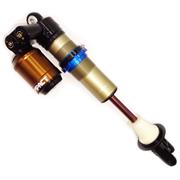
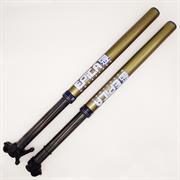
The front fork manages braking forces and absorbs front-end impacts. The rear shock absorber controls rear traction, stability and bump absorption.
Both systems rely on:
• springs calibrated to rider weight
• specific hydraulic oil managing compression and rebound speed
• pistons and shim stacks defining the hydraulic response
• pressurised gas (nitrogen) maintaining internal pressure
Conventional forks, Upside-Down (USD) forks, linkage shocks: every system has its own characteristics and requires specific expertise for a correct fork service or shock rebuild — not just a routine oil change.
• Motocross / Enduro: every 35–45 hours of use
• Amateur street use: every 10,000 km / 6,000 miles
• Track / Racing: every 5,000 km / 3,000 miles
• loss of comfort or precision in response to terrain
• abnormal fork dive or rear squat
• poor response to external clicker adjustments
• excessive stiction — fork or shock feels sticky, especially when cold
• complete disassembly of fork legs or shock body
• oil, seal and bushing replacement
• inspection of all internal components and thorough cleaning
• restoration to factory tolerances and function
A properly rebuilt fork or shock returns to work like new — and often better than stock.
Our approach is technical and measurable:
• tooling dedicated exclusively to suspension work
• high-quality products selected through in-house testing
• standardised and repeatable working processes
• specific expertise on conventional forks, USD forks, linkage shocks and electronic systems (BMW ESA, Showa, WP)
Every job starts from a technical analysis of your specific problem — not from a standard price list.
• stock components have structural limits that tuning alone cannot overcome
• original parts are not serviceable (e.g. sealed cartridge forks)
• the rider has specific competitive goals requiring superior materials
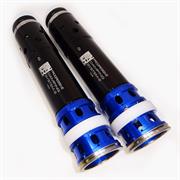
Our kits — valves, piston kits, complete cartridge inserts — are developed to solve known OEM deficiencies, restoring correct hydraulic function where stock components fall short.
Our job is also telling you when you do NOT need to change anything, and a professional revalve is all it takes.
Many claim to do suspension work. We live it.
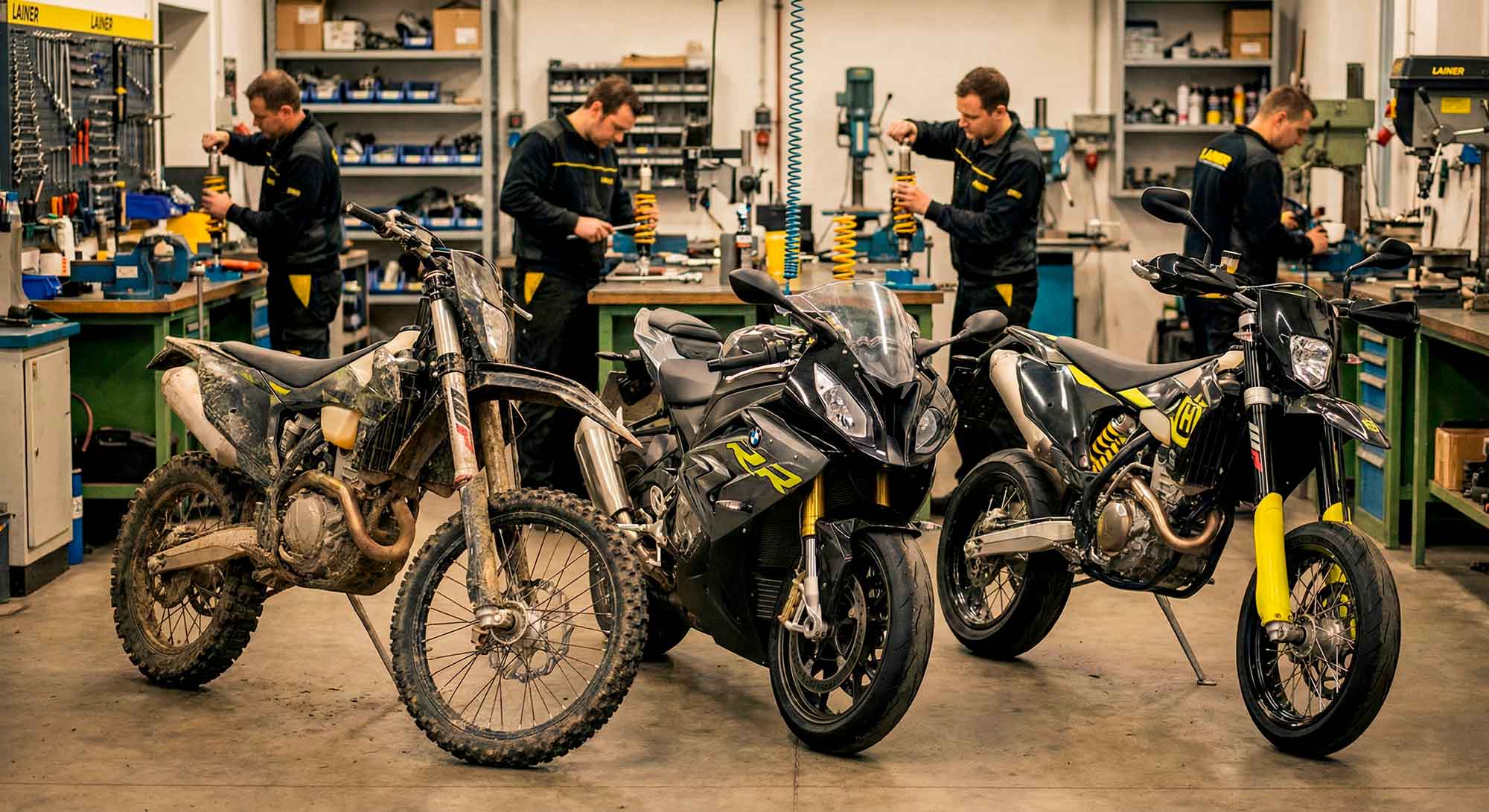
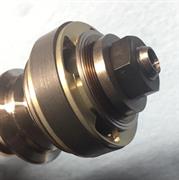
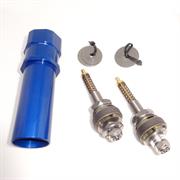
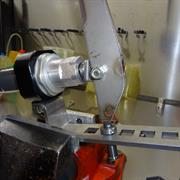
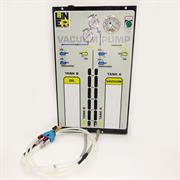
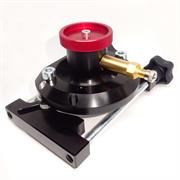
The concrete proof? The precision tools we use every day on forks and shocks are designed and manufactured in-house at Lainer Suspension. Our wrenches, clamps and custom fixtures are Lainer products — sold to professional suspension tuners worldwide.
• no improvised or adapted tools that score fork tubes or ruin damper rod nuts
• every torque value and measurement performed with precision instruments
• guaranteed result repeatability — impossible with DIY methods
If we wouldn't use a tool on a customer's bike, we wouldn't sell it.
Four concrete reasons — no slogans:
• Real Professionals. You speak directly with the technicians who disassemble, measure and tune forks and shocks every day — not a salesperson.
• Measurable Approach. No guesswork: every job is based on data (sag, shim stack, oil viscosity) and ends with a functional test.
• In-house Tooling. We build the tools we use. If we wouldn't trust a tool on a customer's bike, we wouldn't sell it.
• Tailored Solutions. From the Sunday trail rider to the professional racer: every setup is calibrated to real-world use, not a standard price list.
Contact us for a technical consultation on your bike. Speak directly with those who disassemble, measure and tune forks and shocks every day.
How often should the fork and shock absorber be serviced?
For motocross and enduro: every 35–45 hours of use. For amateur street use: every 10,000 km (approx. 6,000 miles). For track and racing: every 5,000 km (approx. 3,000 miles). These are guidelines — intensive use may require shorter intervals.
What is the difference between suspension tuning and service?
Tuning (Revalving): intervention on the hydraulics — shim stacks, anti-friction treatment and overall damping setting. Service (Rebuild): mechanical maintenance — full disassembly, oil and seal replacement, cleaning and inspection. The two are often performed together.
What is Sag and why does it matter?
Sag measures how much the fork and shock compress under the weight of the bike (static sag) and the rider in riding position (rider sag). It is the geometric foundation of any setup: if sag is wrong, all subsequent adjustments lose their effectiveness.
Does suspension tuning really change the ride?
Yes — significantly. Correct tuning improves stability, traction, cornering precision and comfort on rough terrain. It is a fundamental intervention for both the rider seeking daily safety and the racer chasing lap times.
Is it better to service the suspension or install an upgrade kit? It depends. In most cases a professional service and custom tuning is sufficient — and considerably less expensive than a full upgrade. A kit makes sense when stock components have physical limits that cannot be overcome, or when competitive goals demand superior materials.
Is stock suspension always inadequate?
No. Many OEM suspension systems perform very well when regularly serviced and correctly tuned to the rider's weight and riding style. The most common issue is not the quality of the original — it is the lack of maintenance.